
EV Chargers
Charge at home. Wake up full.
A proper home charger adds 30+ miles of range per hour, compared to the 5 miles/hour you'd get from a 3-pin plug. We install 7.4 kW smart chargers from the major brands — Zappi, Ohme, Easee, Hypervolt — all tested, certified, and connected to your Wi-Fi ready to go. We're an OZEV authorised installer, so if you qualify for a government chargepoint grant we claim it and take it off your invoice.
Home charger install, Glenrothes
Why it’s worth it
What you get
Full overnight charge
A 7.4 kW charger adds ~30 miles of range per hour. Most drivers wake up to a full battery every morning.
Smart tariff integration
Chargers like Zappi and Ohme talk directly to Octopus Intelligent — they charge your car at the cheapest slots automatically.
Solar-aware charging
Solar PV fitted? The charger can prioritise surplus solar before pulling from the grid — free fuel whenever the sun's out.
OZEV authorised installer
Authorised by the UK Government’s Office for Zero Emission Vehicles. If you qualify for a chargepoint grant, we claim it and take it off your invoice.
What it costs
Prices most trades will not put online.
| Job | Price | What that covers |
|---|---|---|
| Standard 7.4 kW smart charger, fitted | £900–£1,250 | Charger included. Modern consumer unit, cable run under 10 m, DNO notification, testing, app pairing. |
| Consumer-unit upgrade, if yours needs one | from £599 | Flagged at the site check and quoted as a fixed line before you commit — never a surprise on the day. |
| Video walkthrough or site check | Free | 15 minutes is usually enough to give you a fixed price. |
Fixed prices after we have seen the job. If something genuinely unexpected turns up once we start, we stop and talk — we do not add it to the bill.
Choosing the right home charger
Four chargers cover most of what we install: Myenergi Zappi (best for solar surplus diversion, a bit dearer), Ohme ePod (cleanest integration with Octopus Intelligent, smaller footprint), Easee One (compact and reliable, great for tight cable runs), Hypervolt (sharp design and load-balancing if you want a second unit later). They're all 7.4 kW, all OCPP-compatible, all fine for any modern EV.
We're not tied to a brand and we don't push the dearest unit. Tell us your car, your tariff and where the parking spot is — we'll tell you which makes sense.
Solar-aware charging if you have panels
If you've got solar PV, Zappi and Ohme can both prioritise surplus generation before pulling from the grid. In practice that means on a sunny day in July your car charges for free while you're at work; on a grey February afternoon it falls back to your smart-tariff schedule.
We commission this at install — the charger talks to your CT clamp and your home energy monitor. You don't have to fiddle with anything afterwards.
Looked after once it is fitted
A charger lives on a wall in the rain. DUAL Care EV is £8 a month, or £4 added to another plan, for an annual inspection and test of the RCD, the DC detection and the open-PEN protection, a check of the connections, firmware and app, a written condition report, priority booking and our member rates. Every new install from us includes its first twelve months.
See the DUAL Care plans →Towns we install EV chargers in
Same core service area as our solar work: Glenrothes, Kirkcaldy, Leven, Cupar, St Andrews, Dunfermline, Leslie, Markinch, Windygates, Kennoway, and the rest of Fife. We also take on work across Perth & Kinross and in Edinburgh when the job is right.
OZEV authorised installer
Government chargepoint grants, in plain English.
We are authorised by the UK Government’s Office for Zero Emission Vehicles (OZEV), which runs its EV chargepoint grants. They can only be claimed through an authorised installer, and the grants below are open in Scotland on the same terms as the rest of the UK. OZEV is separate from MCS, which covers our solar and battery work but does not certify EV chargers.
-
Renters and flat owners
75% of the cost, up to £500
One socket
You own and live in a flat, or you rent your home (a house or a flat). It has its own private off-street parking, and you have an eligible electric vehicle.
-
Residential landlords
75% of the cost, up to £500 a socket
Up to 200 sockets a year
You let, lease or manage homes that are already built, including blocks of flats. Each space must be off-street, private and clearly defined, but it does not have to be part of the property. Holiday lets are not eligible.
-
Workplaces
75% of the cost including VAT, up to £500 a socket
Up to 40 sockets across all your sites
Businesses, charities and public-sector organisations with dedicated off-street parking for staff or fleet vehicles. This is the Workplace Charging Scheme.
-
State-funded schools, colleges and nurseries
75% of the cost, up to £2,000 a socket
Up to 40 sockets across all sites
The education version of the Workplace Charging Scheme. Scottish schools apply with their SEED number.
How it works for renters and flat owners
- Survey and quote. We check the parking space, the cable route and your consumer unit, then send a dated written quote. You need it for the application.
- You apply on GOV.UK. You apply online with the quote and the evidence GOV.UK asks for: usually proof of address, permission from your landlord or factor where you need it, and details of your electric vehicle.
- OZEV confirms. Nothing is fitted until OZEV confirms you are eligible. Fitting first would rule the grant out.
- We fit and claim. We install and test a grant-eligible charger, claim the grant from OZEV, and take it off your invoice. You pay the rest.
- Landlords apply online the same way, with our quote. We claim the grant once the chargers are in.
- Workplaces apply for a voucher, which lasts 180 days. We fit a grant-eligible charger and claim before it runs out.
Not covered
- Owner-occupiers of a house with its own driveway, garage or other off-street parking. OZEV’s grant for them ended in April 2022.
- Holiday lets.
- Chargers fitted before the grant is approved. We never install first and hope.
The grants run until 31 March 2027, the government’s announced end date. Figures taken from GOV.UK’s published guidance on . The rules can change, so the GOV.UK pages below always take precedence, and we confirm you are eligible before we quote. Your quote shows the full price and the grant as separate lines.
- GOV.UK — EV chargepoint grants: the current schemes (opens in a new tab)
- GOV.UK — Changes to the chargepoint grant schemes from 1 April 2026 (opens in a new tab)
- GOV.UK — EV chargepoint grant for renters and flat owners (opens in a new tab)
- GOV.UK — EV chargepoint grant for landlords (opens in a new tab)
- GOV.UK — Workplace Charging Scheme (opens in a new tab)
The process
How we work
- 01
Site check
We verify your consumer unit, earthing, and the best cable route from meter to parking spot. 15-minute visit or a video walkthrough.
- 02
Choose your charger
We recommend based on your car, tariff, and whether you have solar. Honest about trade-offs — we're not tied to one brand.
- 03
Install
Typically half a day. DNO notification filed, unit mounted, tested, and paired with your phone app before we leave.
- 04
Follow-up
Issues in the first month? We come back — no callout charge. That rarely happens, but it's the deal.
Job photos
EV charger installs, in pictures.
-
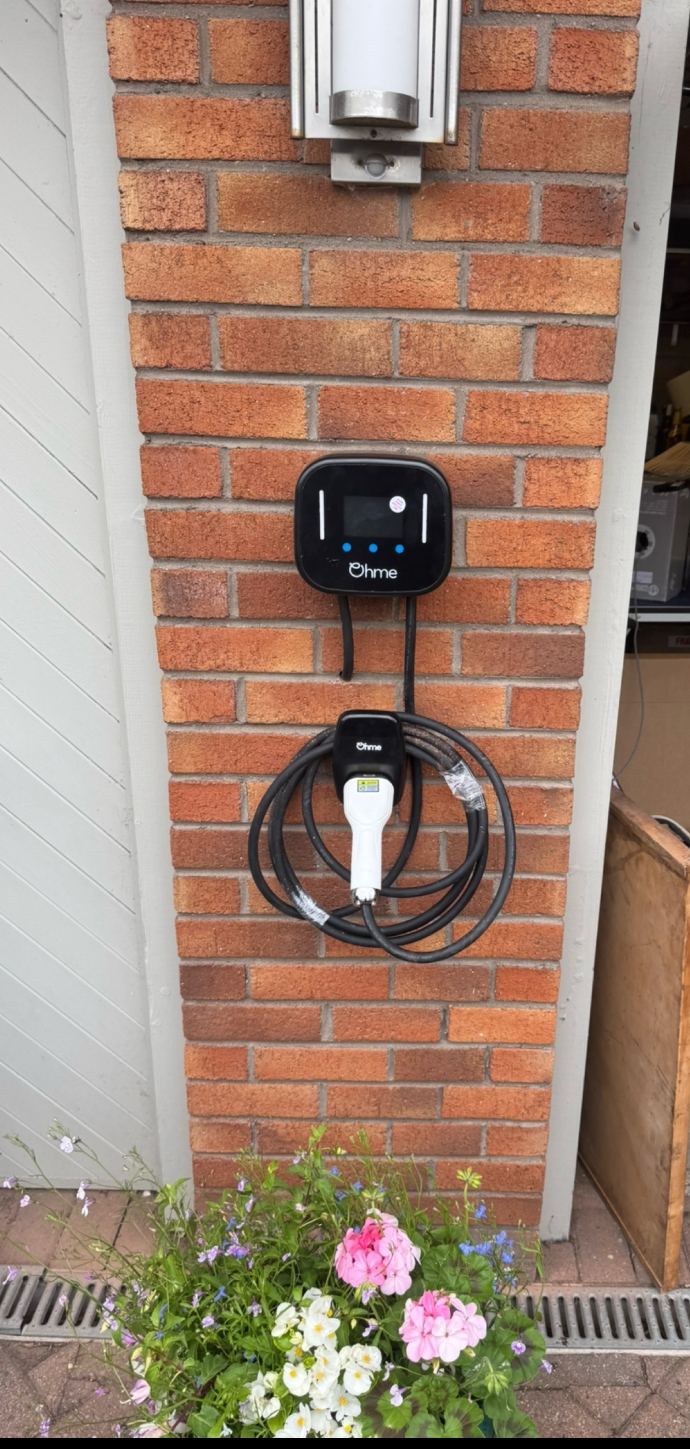
Ohme Home Pro, tethered, on a brick pillar by the drive · Kinross -
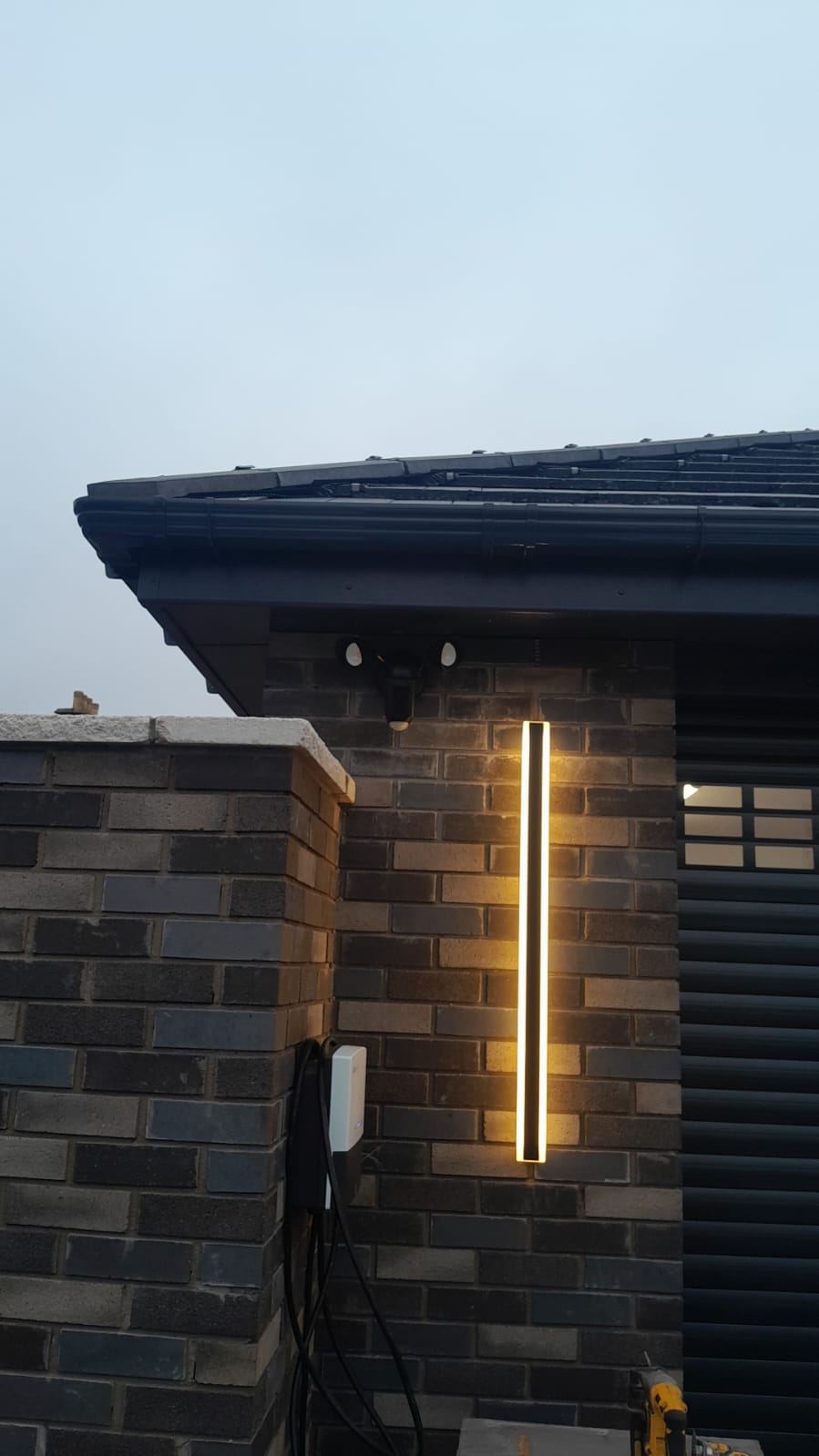
Charger, PIR floodlight and linear wall light on a new garage · Glenrothes


Local coverage
EV Chargers across Fife
Based in Glenrothes and working throughout Fife. See local coverage and request a survey in your nearest area.
Before you ask for a quote
The numbers, written down.
FAQ
Frequently asked
Do I need planning permission for a home charger?
Usually not for a wall-mounted charger serving lawful off-street parking, provided the relevant conditions are met. Listed buildings, conservation areas and unusual locations can need consent, so we check the property and current Fife Council guidance before confirming.
Can I install a charger myself?
A hard-wired 7 kW charger requires appropriate design, DNO notification, testing and certification. In Scotland, the relevant requirements are the Building (Scotland) Regulations and BS 7671 (18th Edition Wiring Regulations), with our work certified through our NAPIT registration.
Will it cope with my fuse board?
Most modern consumer units (post-2008) are fine. Older fuse boards may need a sub-main upgrade — we'll flag it at the site check, before you commit.
Can one charger serve two cars?
One at a time, yes — or we can install a dual charger or a second unit. For two regular drivers, two chargers is usually the right answer.
How much does a home EV charger installation cost?
Standard 7.4 kW install on a modern consumer unit, with a cable run under 10m: £900–£1,250 fitted. The price varies with the charger model, cable distance, whether you need a fuse upgrade, and whether the cable runs internally or externally. We quote fixed after a 15-minute video walkthrough or a site visit.
How long does the install take?
Typically half a day. We arrive, mount the unit, run the cable, file the DNO notification, commission the charger, pair it with your phone app, and walk you through the tariff settings before we leave. You'll be charging by the time we go.
Can you install at a flat or rental property?
Yes. Permission from your landlord, factor or the other owners, and the cable route, are the first checks. You need your own private off-street parking space. If you rent your home, or own and live in a flat, and have an eligible electric vehicle, the OZEV grant covers 75% of the cost up to £500: you apply on GOV.UK with our quote, and once OZEV confirms you are eligible we fit the charger and take the grant off your invoice.
How the grant works →Are you an OZEV approved installer?
Yes. We are authorised by the UK Government’s Office for Zero Emission Vehicles. “Authorised installer” is its own term, and “OZEV approved” means the same. Chargepoint grants can only be claimed through an authorised installer, and on grant jobs we fit a model from OZEV’s eligible list.
Can I get a grant for a home EV charger in Scotland?
Yes, if you fit one of the groups. The UK Government’s OZEV grants cover Scotland: renters and flat owners with their own off-street parking, residential landlords, and businesses, charities and public bodies with dedicated off-street staff or fleet parking can get 75% of the cost, up to £500 a socket, until 31 March 2027. If you own and live in a house with its own off-street parking, there has been no OZEV grant since April 2022.
Tethered or untethered — which is better?
Tethered (with a fixed cable) is more convenient day-to-day — you don't have to plug a separate cable into the unit each time. Untethered (a socket only) future-proofs against EV cable-type changes and is slightly cheaper. For a single car you charge daily, tethered usually wins; for a charger that'll see multiple drivers or EV types, untethered is the safer call.
Will my home electrics handle a 7 kW charger?
Most modern installations (post-2008) are fine. Older boards may need a sub-main upgrade or a dedicated supply — we flag it at the site check, before you commit, with a fixed price for any remedial work needed.
Next step
Ready to talk ev chargers?
Free site survey. Fixed-price quote. No pressure, no jargon — just a clear plan for what we'd do and what it'd cost.